

There is a lot of existing knowledge, protocols, and policies that new employees need to learn. This can make onboarding challenging and prolong the process. It also often requires time from existing personnel who might not have the time to onboard new employees. Other challenges could be that onboarding process has safety risks, or can involve expensive equipment.
XR and AI can be a powerful combination to enable virtual training during onboarding.
- Translating and creating a knowledge base: AI can help translate and structure the knowledge from existing employees, include documents, and process protocols. This can be used as a foundation for an interactive AI-system based on RAG.
- Virtual equipment and virtual environments: When the environment is an important part of the training, virtual environments and virtual equipment can be modeled. This can be done using 3d modeling, or new advancements like Gaussian splatting can make this process faster and simpler. Practicing in VR helps develop muscle memory and situational awareness. An AI- powered virtual coach can guide the trainee through the process. The AI-coach has both spatial awareness and awareness of what stage the trainee is. This allows the AI-coach to point out next steps, clarify protocols or risks, and answer any questions.
- Knowledge Retention: With trainees interacting and experiencing, the training isn’t passive and leads to more retention, no more click-throughs. Research shows that Virtual Reality speeds up training and improves retention.
- Feedback and LMS connection: The data on how the employee performs can be saved and an LMS connection can be added.
Would you like to know more about why VR improves retention or other technologies? Here is some more background info and some examples of our AI avatar-based trainings:
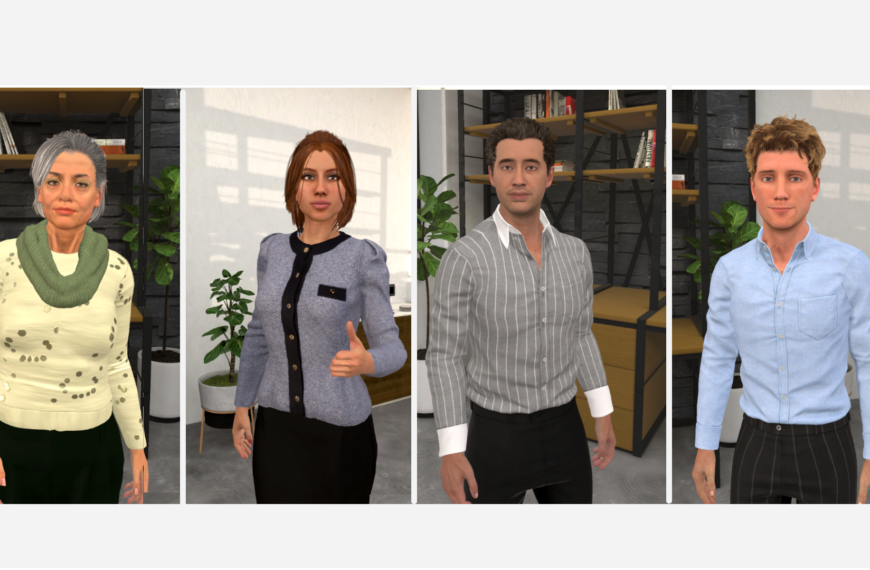
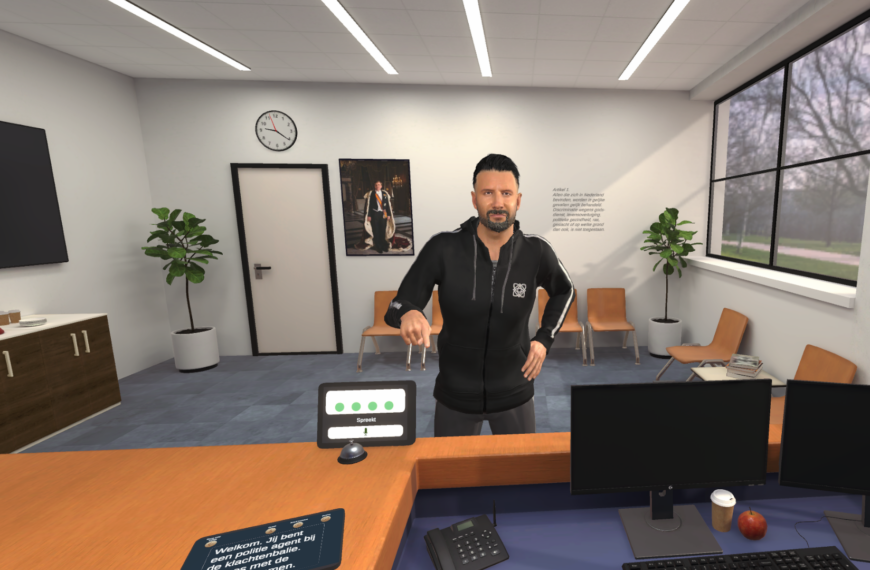

Interested? Would you like a demo? Contact us!
Frequently Asked Questions (FAQs)
What is XR onboarding training?
XR onboarding training uses virtual or augmented reality to place new employees in lifelike scenarios where they can practice real job tasks before performing them on the job.
How does AI improve onboarding with XR?
AI personalizes learning by adapting scenarios, tracking performance, and giving tailored feedback that helps new hires learn faster and retain knowledge longer.
Which industries benefit most from XR onboarding?
Industries with complex workflows, safety risks, or high training costs — such as manufacturing, healthcare, logistics, and high-tech operations — benefit greatly from XR + AI onboarding programs.
Is XR onboarding suitable for remote employees?
Yes. XR onboarding can be delivered remotely using VR headsets or desktop simulations, making it ideal for distributed teams.
Does onboarding include measurable outcomes?
Yes. AI systems capture performance metrics (speed, accuracy, decision quality) and provide dashboards that measure learner progress.
What hardware is needed for XR onboarding?
Depending on your needs, options range from standalone VR headsets to desktop XR experiences. Custom integration with existing tech stacks is also possible.
Can onboarding modules be reused or updated?
Absolutely — XR modules can be updated with new content, expanded scenarios, or additional AI features as your processes evolve.

